Slickline Rope Socket
Technical Description and Specifications
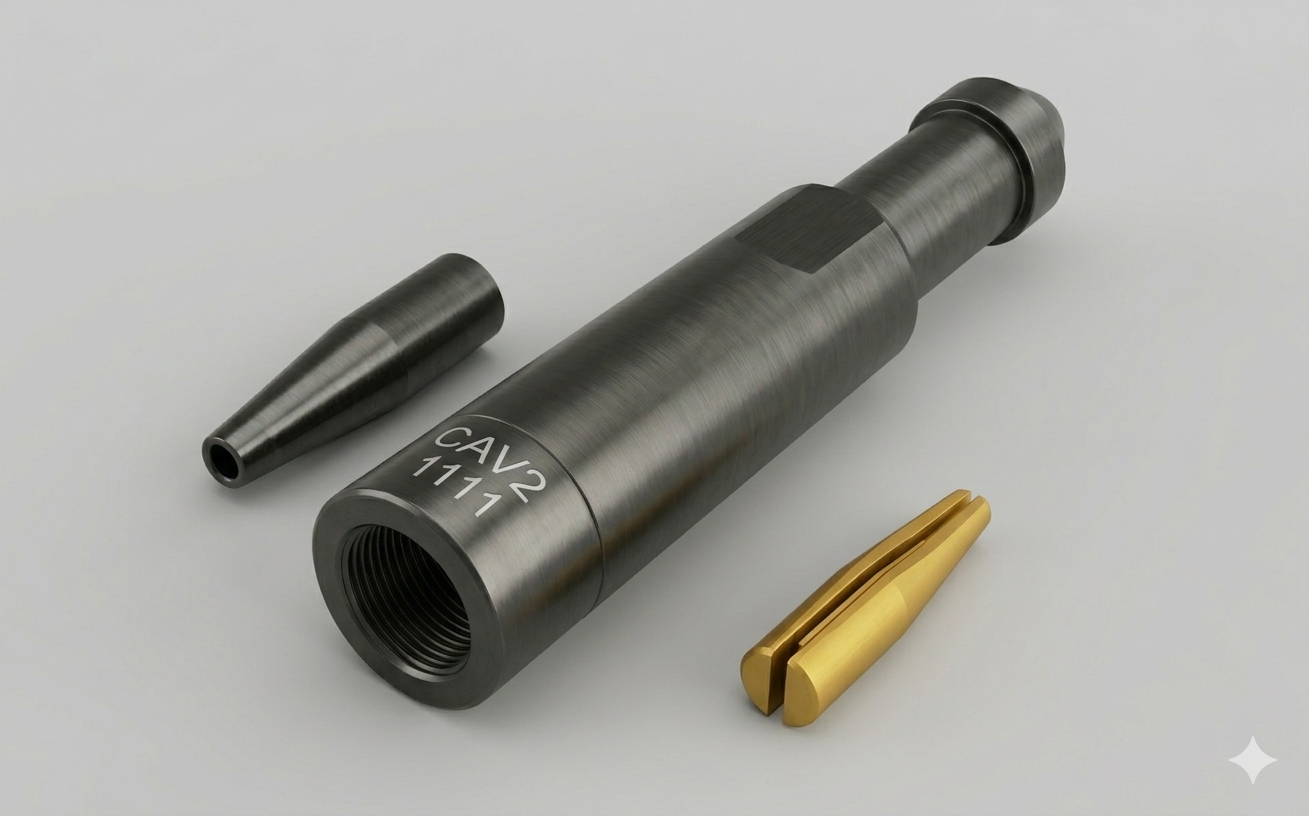
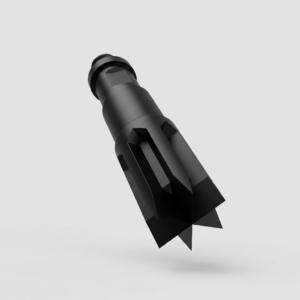
The Slickline Rope Socket is the most critical mechanical interface in any well intervention operation. It serves as the “handshake” between the surface wireline and the downhole tool string. Its primary function is to securely anchor the slickline wire to the Bottom Hole Assembly (BHA), providing a high-strength connection that can withstand the rigors of jarring, high-tension pulls, and corrosive wellbore fluids.
Key Technical Specifications and Operation
The Pear-Drop Mechanism: The most common design for slickline is the Pear-Drop style. The wire is threaded through the socket body, wrapped around a tapered “pear-drop” wedge, and then tucked back. As tension increases, the wedge is pulled tighter into the tapered housing of the socket, creating a self-energizing mechanical grip.
Vibration Dampening: Internal to the socket is a high-tensile Spring. This spring absorbs the shock of high-frequency vibrations and the “snap” of jarring operations, preventing the wire from fatigue-failing at the point of attachment.
Controlled Weak Point: A rope socket is often engineered to be the “planned” failure point. By selecting a specific wrap method or wire preparation, the operator ensures that if the tool string becomes irretrievably stuck, the wire will pull out of the socket rather than breaking at surface or mid-wellbore, leaving a clean “fish neck” for retrieval.
Fluid Bypass: The body is machined with relief holes to prevent hydraulic locking during assembly and to ensure that well fluids do not interfere with the movement of the internal wedge or spring.
Integral Fish Neck: The top of the rope socket body features a standard external fish neck, ensuring that the entire tool string can be recovered using a standard pulling tool if the wire is severed.
Customization and Materials
Material Choice: Standard units are forged from 4140 Alloy Steel. For high-corrosion environments, 17-4 PH Stainless Steel or Monel versions are utilized to prevent stress-corrosion cracking.
Wire Size Specifics: Sockets must be matched exactly to the wire diameter (e.g., 0.092″, 0.108″, or 0.125″) to ensure the pear-drop wedge sits correctly and provides the rated breaking strength.
Connection Types: Available with all industry-standard pin connections (e.g., 15/16″-10 UN, 1-1/16″-10 UN) to mate directly with the first Stem (Weight Bar) in the BHA.
Critical Parameters
| Parameter | Customizable Range |
| Compatible Wire Sizes | 0.092″, 0.108″, 0.125″, 0.140″, 0.160″ |
| Tool OD (Outside Diameter) | 0.750″, 1.00″, 1.25″, 1.50″ |
| Material Standards | AISI 4140 / NACE MR0175 |
| Connection Profile | 15/16″ – 10 UN / 1-1/16″ – 10 UN |
| Internal Components | Pear-drop, Spring, Sleeve, and Pin |

Reviews
There are no reviews yet.