
Description
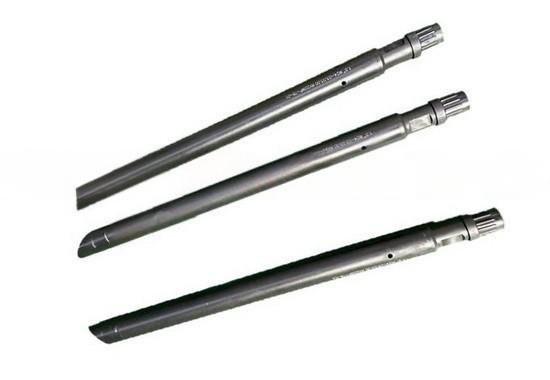
Slickline Sample Bailer
Technical Description and Specifications
The Slickline Sample Bailer is the primary diagnostic tool used to retrieve physical evidence from the wellbore. Think of it as the “investigative journalist” of the tool string—it is sent down to collect representative samples of wellbore fluids (oil, water, or chemicals) or to recover bottom-hole debris like sand, scale, or metallic shavings. These samples are critical for laboratory analysis to determine fluid properties, corrosion causes, or the source of wellbore blockages.
Key Technical Specifications and Operation
Valving Mechanism: The most common design features a simple Ball or Flapper Check Valve at the bottom. As the bailer is lowered into the fluid or pushed into debris, the valve opens to allow material into the barrel. When the tool is pulled upward, the weight of the sample and the pressure of the fluid force the valve shut, trapping the contents inside.
Modular Barrel Length: The main body is a hollow tube, often available in modular sections. Depending on the volume of the sample required, multiple barrels can be connected to increase the total capacity.
Atmospheric vs. Hydrostatic: * Standard Bailers: Rely on gravity and tool movement to capture samples at wellbore pressure.
Hydrostatic Bailers: Use an internal atmospheric chamber and a shear-disk mechanism. When the disk is broken (usually by jarring), the pressure differential “vacuums” the fluid or debris into the chamber instantly.
Venting System: The top sub is designed with vent holes to allow air or gas to escape as the fluid enters the barrel, ensuring a full and representative sample.
Fish Neck & Connection: Features a standard industry fish neck for retrieval and a standard pin connection to mate with the Stem or Jars.
Customization and Materials
Material: Typically manufactured from 4140 Alloy Steel or 316 Stainless Steel to prevent sample contamination. For highly corrosive environments, Inconel or Monel components are used to meet NACE MR0175 standards.
Valve Styles: * Ball Valve: Best for thin fluids and light oils.
Flapper Valve: Better suited for heavy debris, sand, or thick sludge.
Top Subs: Available with different port sizes to control the rate of entry for the sample.
Critical Parameters
| Parameter | Standard Fluid Bailer | Hydrostatic/Sand Bailer |
| Outside Diameter (OD) | 1.0″, 1.25″, 1.5″, 1.75″ | 1.5″, 1.75″, 2.125″ |
| Barrel Length (Per Section) | 3ft, 5ft, 10ft | 5ft, 10ft |
| Volume Capacity | ~0.5 to 2.5 Liters | ~1.0 to 5.0 Liters |
| Connection Profile | 15/16″ or 1-1/16″ UN | 15/16″ or 1-1/16″ UN |
| Service Rating | Std / Sour | Std / Sour |

Reviews
There are no reviews yet.